The Bedfordshire Regiment in the Great War

Officers who died serving in the 6th Battalion
(This roll of honour is in chronological order)
|
Lieutenant Aubrey Crawshaw DENHAM Died 1st April 1915, aged 34. Aubrey was born 14 June 1881 and enlisted into the army 3 September 1914. He initially served in the ranks, joining the Royal Naval Division at Crystal Palace 4 November 1914, where he caught a chill. On 27 November Aubrey was appointed a Temporary Lieutenant in the 6th Battalion at Aldershot. The same day he was granted the customary few day's leave and returned home to Huddersfield, taking to his bed on arrival. Other than a few hours on Christmas Day, he remained completely bed bound as pleurisy had set into his left lung along with several complications. On 2 February 1915 Lieutenant Denham was posted to the 10th (Service) Battalion, although he was never to physically join them. On 31 March he was examined by the military doctor who reported him suffering from advanced tuberculosis of both lungs, with a very high temperature and racing pulse, adding "there is every reason to think that Lt. Denham will not live very long." Unfortunately, Lieutenant Denham died in his parents home, 4 Woodland Mount in Huddersfield, in the small hours of the morning 1 April 1915. He was the only son of John William and Annie Denham of 3 Woodland Mount, Trinity Street in Huddersfield and is buried in the Huddersfield Cemetery. |
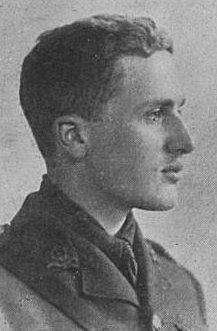 George
left England with the battalion, arriving in France late July 1915.
The battalion's first taste of the trenches was mid August and,
whilst digging early in the morning of the 19th August 1915, 2/Lt
Smith-Masters ventured out of the trenches and was shot dead by
a sniper.
George
left England with the battalion, arriving in France late July 1915.
The battalion's first taste of the trenches was mid August and,
whilst digging early in the morning of the 19th August 1915, 2/Lt
Smith-Masters ventured out of the trenches and was shot dead by
a sniper.|
Died of wounds 22nd November 1915, aged 25. Ernest was born 18 April 1890, became a native of Queensland in Australia and was educated at a school for missionaries in Blackheath before gained his M.A. from Oxford in 1911. He was a resident of Stanbridge, near Leighton Buzzard at the time he enlisted into the army 18 August 1914 and arrived in France with the battalion on 30th July 1915. On the 21st November 1915 he was on a working party when he was hit by 2 bullets in the abdomen and severely wounded. Sadly he died the following day at the C.C.S. in Henu. Ernest was the youngest son of the Baptist Minister Reverend George James and Hannah Dann of Bankipore in India and was buried in Henu Churchyard, off of the Arras-Doullens road 1km east of Pas-en-Artois. In a letter after his death, he was described as "quiet and unassuming ... dear, loving fellow, full of the real enthusiasm of humanity" |
The battalion were engaged during the Battles of the Somme 1916 and during the Battle of Pozieres on the 15th July 1916, the battalion attacked across a 2,000 yard stretch of open ground towards Pozieres as a part of a larger assault. In the assault twelve Officers and over 200 men became casualties with 3 of the Officers being killed. The following three are from that attack.
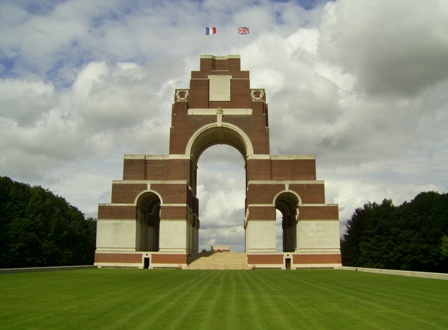
The Thiepval Memorial to the Missing
|
Killed in action 15th July 1916.
After a spell on Staff service he rejoined the battalion in July and was killed within days whilst leading his Company in the attack. He was about to marry Lucy Helen of Bournemouth, daughter of the late Major John Jervois, R.E. Garth was the only child of the late Colonel E.J.T. (also spelt E.D.F.) Bignell of the Indian Staff Corps and is buried in the Pozieres British Cemetery at Ovillers-la-Boiselle. His mother Mary Sybella died in London on the 14th August 1916, leaving no one from their family alive. |
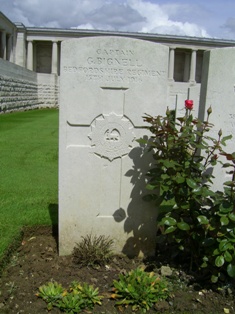 He
was educated at Rugby and R.M. College in Sandhurst and was commissioned
a 2/Lt in October 1910. Garth joined the 6th battalion when it was
raised in August 1914 and went to France with them in August 1915.
He
was educated at Rugby and R.M. College in Sandhurst and was commissioned
a 2/Lt in October 1910. Garth joined the 6th battalion when it was
raised in August 1914 and went to France with them in August 1915.
|
Second Lieutenant John Norman HUNSTON Died of wounds 15th July 1916, aged 20.
He is buried in the Becourt Military Cemetery, Becordel-Becourt, 2km east of Albert. Johns elder brother, Robert Donald Hunston, was killed aged 21 in the 7th battalion on the 28th September 1916 and is buried in the Mill Road cemetery, Thiepval. |
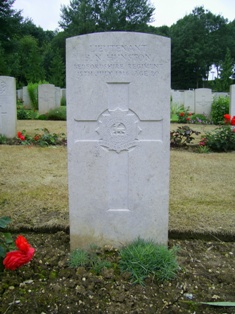 John
was born at Chipping Norton in Oxfordshire and arrived with the
battalion on the 5th April 1916. He was the son of Robert George
Laskey and Helen Hunston of 32 Hallewell Road in Edgbaston, Birmingham.
John
was born at Chipping Norton in Oxfordshire and arrived with the
battalion on the 5th April 1916. He was the son of Robert George
Laskey and Helen Hunston of 32 Hallewell Road in Edgbaston, Birmingham.
|
Second Lieutenant William Hugh Byam SHERVINGTON Killed in action 15th July 1916, aged 26. William arrived with the 6th battalion on the 27th March 1916 from the 9th battalion and fell during the assault on Pozieres. He was the son of Laura Shervinton from "Claremont", King Edward Avenue in Broadstairs and the late Col. St. Leger Shervinton. William has no known grave but is remembered on the Thiepval Memorial. Second Lieutenant Shervington can be seen here in the 3rd battalion officers' group photograph from 1915. |
|
Second Lieutenant Maurice Stanley Charles COOPER Died of wounds 10th August 1916, aged 19. Maurice was born 21 November 1896 and was educated at Perse School, Cambridge where he was a Lance Corporal on their O.T.C. contingent. He applied for a commission in June 1915 and in August was appointed as a Temporary Second Lieutenant in the New Army, being posted to the 9th Bedfordshires for training. Once complete, Maurice landed in France 21 May 1916 and joined the 6th Bedfordshires in the line on 24 May. Second Lieutenant Cooper was badly gassed in the assault on the 9th when 2/Lt Hamilton (above) fell and died in 104 Field Ambulance the same day from the effects of gas poisoning. He was the son of Jonathan and Emma Emily Cooper, florists, of 8 Market Street in Cambridge and is buried in the Millencourt Communal Cemetery, 2km west of Albert. |
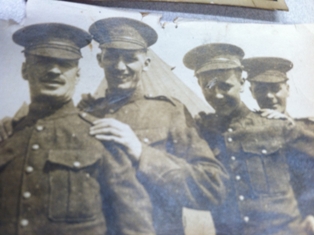
On the 15th November 1916 4 Officers were killed during the Battle of the Ancre when the battalion assaulted Munich Trench east of Beaumont Hamel. The following day saw them heavily shelled whilst they held positions in Waggon Road waiting for orders to move forward or retire again. The 4 below are those who fell during the Ancre battle.
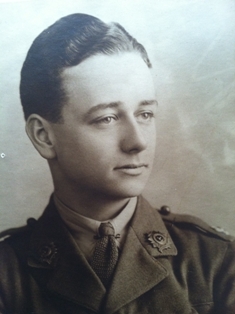 Killed
in action 15th November 1916, aged 19.
Killed
in action 15th November 1916, aged 19. 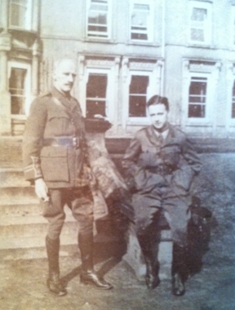
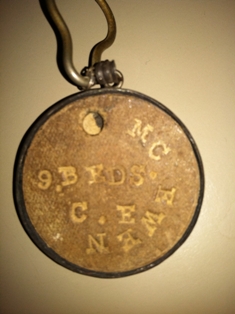
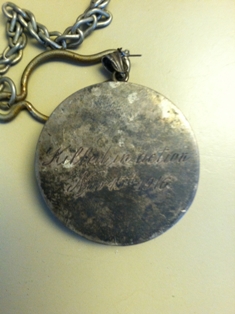
|
Second Lieutenant John James Wahal (Wahab) GRIFFIN Killed in action 15th November 1916, aged 22.
He applied for a commission in January 1915 and arrived with the battalion on 16 August 1916 and, other than a spell in the Trench Warfare School that October, remained with them until his death in action. Second Lieutenant Griffin is buried in the Frankfurt Trench Cemetery, Beaumont Hamel. |
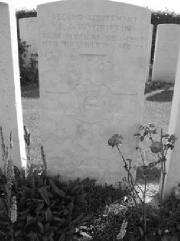 John
was born 27 July 1884, the only son of Robert Anderson (later a
Manager in the Bank of Ireland) and Alice Griffin of St. Catherines
Park, Rathfarnham, Co. Dublin.
John
was born 27 July 1884, the only son of Robert Anderson (later a
Manager in the Bank of Ireland) and Alice Griffin of St. Catherines
Park, Rathfarnham, Co. Dublin.
|
Second Lieutenant Cecil Cooper LE MESSURIER Killed in action 15th November 1916, aged 32 Cecil was initially a Sergeant in the 15th London Regiment and was gazetted as a 2/Lt in the Bedfords on the 29th October 1915. He arrived with the battalion around August 1916, possibly in the large draft from the 1st August with George McEwen (above). He was the son of Alfred Noel and Louisa Arabella Le Messurier and the husband of Winifred Lucy Le Messurier of 16 Hungerford Road, Camden Road, Holloway, London. Cecil is buried in the New Munich Trench British Cemetery, Beaumont Hamel. |
|
Second Lieutenant Arthur JESSON Killed in action 16th November 1916, aged 28 Initially Private 1975 in the 15th Londons, Arthur served on the Western Front from the 17th March 1915 until commissioned into the Bedfordshires 4th December 1915. He joined the 6th battalion in the field seven days later, survived the Somme battles of 1916 only to be caught in the heavy shelling as the battalion sheltered on Waggon Road, Beaumont Hamel on the 16th November. Arthur was initially posted as missing on the 16th and later confirmed as having been killed that day. He was the son of the late Charles and Mrs. Jesson of Gumley, Market Harborough in Leicestershire and has no known grave but is remembered on the Thiepval Memorial. |
In April 1917 the battalion was heavily engaged in the Battle of Arras, which saw the highest daily casualty rate of any of the battles the British army were engaged at in the war. Between the 9th and 28th April they saw eight days of front line battle and came out of the battle with just 58 men left. The next five Officers fell during the Battle of Arras. None of them were recovered so all are listed on the Arras Memorial to the missing.
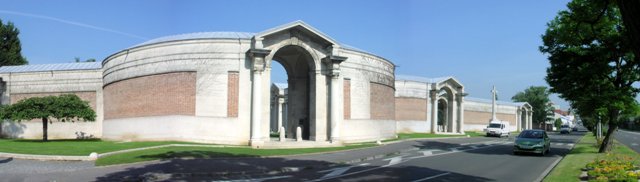
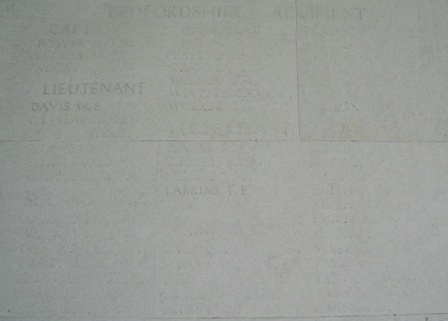
The Arras Memorial to the Missing
|
Lieutenant Giles Havergal SHAW Killed in action 11th April 1917. 5th Battalion, attached to the 6th Battalion. Giles was killed when the 6th Battalion attacked La Folie Ferme and Le Bergere on the 10th April, in conjunction with the 111th Brigade's attack on Monchy-Le-Preux. |
|
Lieutenant Frederic George THOMPSON Killed in action 11th April 1917, aged 28. Frederic seems to have served in the 7th battalion at some stage but was in the 6th at the time of his death. He fell as the battalion held their newly won positions around La Bergere, south of Monchy le Preux along the Arras-Cambrai road. Lieutenant Thompson was the son of Louisa S. Thompson of 79 Castle Road in Bedford and the late Frederic Thompson. |
|
Second Lieutenant Bernard Valentine COLCHESTER Killed in action 25th April 1917, aged 27. Bernard had emigrated to Canada as a child so initially enlisted as Private 77929 in the 16th Canadian infantry, having served in France from the 26th April 1915. He arrived with the 6th Bedfords on the 12th December 1915 and survived the Somme battles of 1916 as well as two further assaults during the Arras battles in April 1917. On the 24th or 25th April Bernard was amongst the large officer casualty list from the battalion's attack against the wide open Greenland Hill, when they were badly mauled by a nest of machine guns in the infamous Chemical Works to their south. Bernard's brother, Edward, had been killed by a shell on board HMS Irresistable at Gallipoli in 1915, just before she was torpedoed and another brother, Geoffrey, was severaly wounded and won the Military Cross in the Royal Engineers in 1916. Bernard was the fourth son of Marguerite Branford Colchester from Great Shelford in Cambridge, and the late Edward Cromwell Colchester. |
|
Second Lieutenant Herbert Edward FOSKETT Killed in action 28th April 1917, aged 24. Herbert enlisted into the army September 1914, becoming Private 2810 in the Hertfordshire Regiment. After training, he joined the 1st/1st Hertfordshires on the Western Front in April 1915 and by the time the Territorial soldiers were renumbered early in 1917, Herbert was serving as Acting Sergeant 265678. After being commissioned as an officer 24 January 1917, he trained with the 5th Battalion but was posted to France. Second Lieutenant Foskett arrived with the 6th Bedfords in France on 16th April 1917 with three other officers, all of whom were killed or wounded within twelve days. On the 28th April, the battalion attacked Greenland Hill for the second time in a few days but only 58 men survived the carnage of their attack, Herbert being among the long list of killed, wounded and missing. Second Lieutenant Foskett was the son of Mary Foskett of Western Road in Tring, Herts, and the late Herbert Foskett. |
|
Lieutenant Ronald Henry Evan ROSE Killed in action 28th April 1917, aged 27.
Ronald arrived in France with the battalion in July 1915 and was promoted to a Lieutenant 30 March 1916. He was presumably taken ill or wounded at some stage on the Somme, as he is recorded as rejoining them 16 April 1917. Twelve days later he was killed in action. Lieuteuant Rose is remembered on the Arras Memorial to the missing and left a widow and a son. |
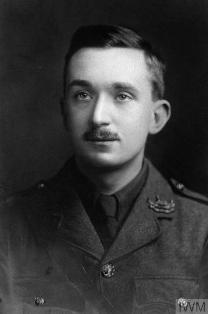 Ronald
was the only son of Mr and Mrs Fulwood Rose from Bath and was educated
at Bath College before gaining a degree from Magdalen College, Oxford.
When war broke out he was a student of the Inner Temple but enlisted
into the army and was commissioned as a Second Lieutenant in the
6th Battalion on 10 September 1914.
Ronald
was the only son of Mr and Mrs Fulwood Rose from Bath and was educated
at Bath College before gaining a degree from Magdalen College, Oxford.
When war broke out he was a student of the Inner Temple but enlisted
into the army and was commissioned as a Second Lieutenant in the
6th Battalion on 10 September 1914.
|
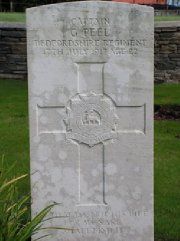
Captain Geoffrey PEEL Killed in action 17th July 1917, aged 22.
He was the fifth son of the late Edward Lennox Peel and of Amy Peel of 15 Mount Avenue in Ealing, London. He is buried in the Pond Farm Cemetery in Wulvergem, 8km south of Ypres. |
|
Lieutenant Edmund Arthur Howe LILLEY See Officers died in Other Units page. |
|
Second Lieutenant Charles Edmund KIRK Killed in action 6th August 1917, aged 36. Charles was from Bedford originally and served initially in the 7th Dragoon Guards. Charles was killed whilst on a working party in no-man's land but his body was recovered and he is buried in Kemnel Chateau Military Cemetery, 8km south-west of Ypres. He was the son of Ann and the late John Kirk and husband of Hilda May Kirk of 3 Cossington Road in Canterbury. |
|
Captain Frederic Gerald Bazalgette LUCAS, MC Died of wounds 10th August 1917, aged 23 Frederic was gazetted as a 2/Lt 31st August 1914 and landed in France 30th July 1915. His Military Cross citation appeared in the London Times 22nd September 1916 and was for commanding his company for three hours, after his O.C. was killed despite being wounded himself. This would have been during the assault in August around Bazentin-le-Petit. Despite surviving the Somme and Arras battles, Captain Lucas was killed during heavy shelling on the 9th August 1917 whilst the battalion were in the line. He was the son of Gerald Bazalgette Lucas and Emma Grace Lucas of "Meadowside" in Pembury, Kent and is buried in the Bailleul Communal Cemetery, midway between St. Omer and Lille. |
|
Killed in action 22nd September 1917 John Hislop was born at Grave de Leq Barracks, Jersey in 1872, when the 1st Battalion of the 16th Foot was stationed there. He was the eldest son of Honorary Major & Quarter Master Archibald Hislop, who served in the Regiment from 1861 to 1896 and 1900 to 1902. John attested for service with the 1st Battalion in June 1888, aged 15 years, 11 months, and was posted to the Depot (by then a Lance Corporal) from Malta in December 1890. He was promoted to Corporal in August 1891 and posted to the 2nd Battalion in May 1892. He returned to the 1st Battalion, by then a Sergeant, in February 1896, proceeding to the East Indies. He was promoted Colour Sergeant in April 1900 and posted home to the 2nd Battalion in January 1906. He reverted to Sergeant, "at his own request", in August 1906. He was again promoted to Colour Sergeant in July 1907, embarking for Gibraltar in August. In January 1908 he again reverted to Sergeant "at his own request" and was discharged to a pension, after 19 years, 265 days service, in February 1908. He lived in Ealing and gained employment with the Prison Service. When war broke out in 1914 John attested for the Bedfordshire Regiment as a Private, was posted to the Depot and resumed the rank of Sergeant - all on 21st September 1914. He was posted to the newly established 8th Battalion on 24th September and promoted CSM on 13th October. He proceeded to France in August 1915 and was appointed Acting RSM "in the field" in October that year. In December 1915 he was appointed to a Commission as a Temporary 2nd Lieutenant, still with the 8th Battalion. Promotion to Temporary Lieutenant a few weeks later in January 1916, was followed by the award of the Military Cross "for distinguished service in the field" in June 1916. His citation reads "During a heavy gas attack, carrying ammunition up to the front line and digging out two machine gunners who had been buried by a shell, all under heavy gun-fire." He was invalided home due to illness contracted through exposure in the trenches and, after two months sick leave, joined the 27th Training Reserve Battalion, Bedfordshire Regiment at Dovercourt. John was transferred into the 6th battalion once he had recovered and was killed instantaneously by a shell while proceeding up the line with supports. His last words written to his wife were "Duty must be done. Cheerio." Captain Hislop's Commanding Officer wrote to his wife as follows: "He was killed at the head of his company, whilst leading it to the firing line, on the night of Sept. 22. Fighting was very heavy, and, unfortunately, it was necessary to pass through a heavily shelled area. It was when doing this that your husband and several others lost their lives. We shall all miss him very much indeed. He died grandly, nobly doing his duty to the last as a British soldier, and is now resting from his labours with the many others who have made the supreme sacrifice for their country." Captain John Hislop, M.C. was aged 45 years and left a widow and six children, the eldest of whom, Leslie, was serving with the Middlesex Regiment at the time - he later served with the Bedfordshire Regiment TF. John has no known grave, but he is commemorated on panel 48 at the Tyne Cot Cemetery, Passchendaele, Belgium. One of his grandsons, Roger, must have inherited his soldier genes, serving for many years in the King's, Liverpool Regiment. He reached the rank of Lieutenant Colonel and his last posting was Officer Commanding the 5th (Territorial) Battalion. In addition to the Military Cross, Captain Hislop qualified for the 1914 - 15 Star, British War Medal and Victory Medal. |
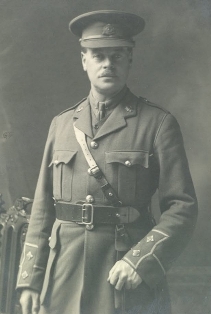 Although
recorded as having been killed in the 8th battalion, Captain Hislop
actually fell in the 6th battalion.
Although
recorded as having been killed in the 8th battalion, Captain Hislop
actually fell in the 6th battalion. |
Second Lieutenant George Edward INCH Killed in action 22nd September 1917, aged 27 George was in the 1st battalion but was attached to the 6th when he fell. The battalion were on the way up to the trenches to relieve the 6th Cheshires when the relief was spotted by enemy observers and the area was swamped with shells. George was killed along with Captain Hislop (above), along with another 30 casualties. He was the son of George Edward and Alice Inch of 2 Charlotte Street in Bolton, Lancs and the husband of Mary Inch. He has no known grave but is remembered on the Tyne Cot Memorial. |
|
Second Lieutenant Nelson Wynne RYCROFT Killed in action 25th September 1917 Nelson was killed during heavy shelling as the battalion held the front lines. He has no known grave so he is remembered on the Tyne Cot Memorial to the missing. |
|
Captain and Adjutant Harold John CUNNINGHAM, MC Died of wounds 4th October 1917, aged 25.
On October the 4th 1917 the battalion was moving up to the front line SE of Ypres under heavy shell fire to take part in the Battle of Broodseinde. They had been sheltering for some hours in some extensive dugouts known as Canada Tunnels and when the time came to move again Cunningham was outside with Lt Clifford Battalion Intelligence Officer, directing the companies as they filed into the open. A shell burst quite near them and he was so severely wounded that he became unconscious almost immediately and died ten minutes later at an adjacent dressing station to which he had been carried by Lt Clifford who was also wounded. The only words he spoke before he died was to enquire about Lt Clifford's wounds and to encourage him to go to the dressing station. Captain Cunningham was just 25 years old and a much loved and admired Officer as the letters after his death show. Harold can be seen opposite, the photograph being taken in 1911. He was the son of Ellen C. Cunningham, of Spencer House, St. Albans, and the late John William Cunningham and lies in the Larch Wood (Railway Cutting) cemetery, 4km south of Ypres centre. (My thanks to John Hamblin for the Roll of Honour information) |
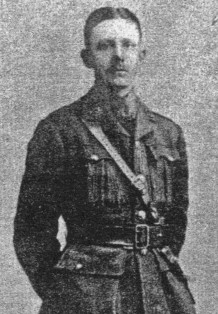 Harold
was the only son of the late John William Cunningham of Harrow and
Mrs Cunningham of Spencer House St Albans. He entered Tonbridge
School (going into Judde House) in 1905 becoming Captain of the
school for 1910/11. He joined the OTC in September 1910 and was
promoted to sergeant. He was also a violinist and won the school
music prize. On leaving school he trained at Willam Deacon's Bank
and afterwards joined the Chartered Bank of India. On outbreak of
war he applied for a commission and was gazetted a Temporary 2nd
Lieutenant in the 6th Battalion on the 16th November arriving in
France in July 1915. He became Adjutant in February 1916 and was
promoted temporary Lieutenant on April 15th 1916 and Temporary Captain
on August 11th 1917. He was awarded the Military Cross in the gazette
of June 3rd 1917 for his actions at the Battle of Arras in April
which left the battalion a mere skeleton.
Harold
was the only son of the late John William Cunningham of Harrow and
Mrs Cunningham of Spencer House St Albans. He entered Tonbridge
School (going into Judde House) in 1905 becoming Captain of the
school for 1910/11. He joined the OTC in September 1910 and was
promoted to sergeant. He was also a violinist and won the school
music prize. On leaving school he trained at Willam Deacon's Bank
and afterwards joined the Chartered Bank of India. On outbreak of
war he applied for a commission and was gazetted a Temporary 2nd
Lieutenant in the 6th Battalion on the 16th November arriving in
France in July 1915. He became Adjutant in February 1916 and was
promoted temporary Lieutenant on April 15th 1916 and Temporary Captain
on August 11th 1917. He was awarded the Military Cross in the gazette
of June 3rd 1917 for his actions at the Battle of Arras in April
which left the battalion a mere skeleton.|
Second Lieutenant Simon VANDER-LINDE Died of wounds 18th October 1917. Simon is buried in the Lijssenthoek Military Cemetery, 1km south or Poperinghe west of Ypres. |
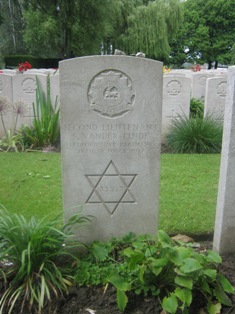 A
German airplane bombed the battalion as they trained in camp north-east
of Ypres, killing 2/Lt Van der Linde and wounding 4 others.
A
German airplane bombed the battalion as they trained in camp north-east
of Ypres, killing 2/Lt Van der Linde and wounding 4 others. |
Second Lieutenant George Alfred BINNS Killed in action 8th April 1918, aged 22
After the opening phase of the German Spring offensives had died down, the battalion was on the front line on the Somme during which activities George was killed on the 8th April. He was the son of Nugent and Alice Binns of 2 Park Villas, Park Road in Radlett, Herts. George is buried in the Gommecourt British Cemetery No.2, Hebuterne, 15km due north of Albert, just north of Beaumont Hamel. |
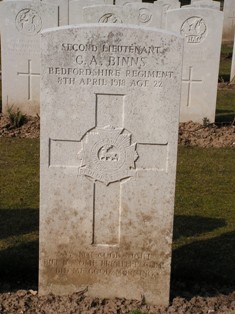 George
joined the battalion on the 6th February 1918 from the H.A.C. and
served just two months before losing his life.
George
joined the battalion on the 6th February 1918 from the H.A.C. and
served just two months before losing his life. |
Second Lieutenant William AMBRIDGE Killed in action 7th/8th April 1918.
2/Lt Ambridge was killed along with George Binns (above) on the 8th April whilst the battalion held the lines on the Somme. William is buried in the Gommecourt British Cemetery No.2, Hebuterne, 15km due north of Albert, just north of Beaumont Hamel. |
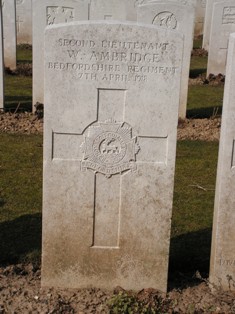 William
had only recently moved from the disbanded 8th battalion to the
6th, arriving with them on the 27th February 1918.
William
had only recently moved from the disbanded 8th battalion to the
6th, arriving with them on the 27th February 1918. Site built by Steven Fuller, 2003 to 2023